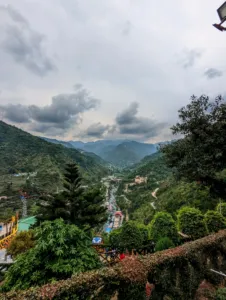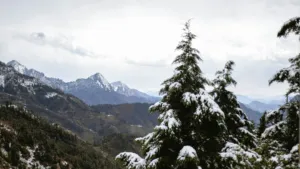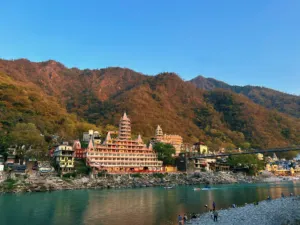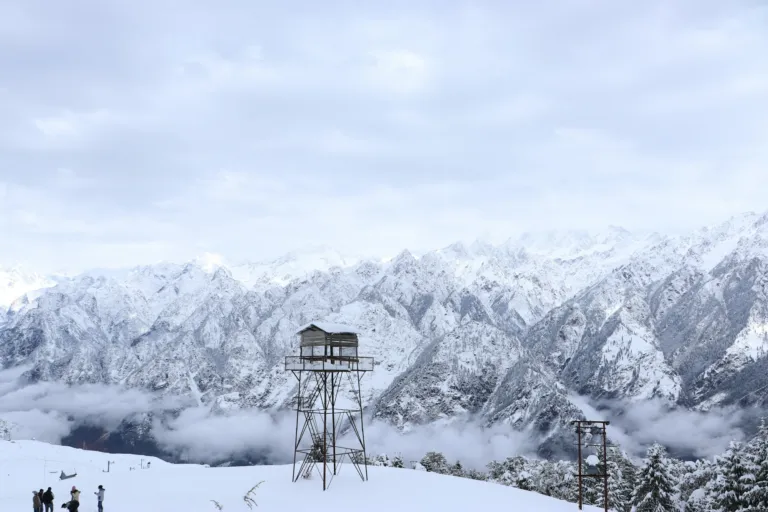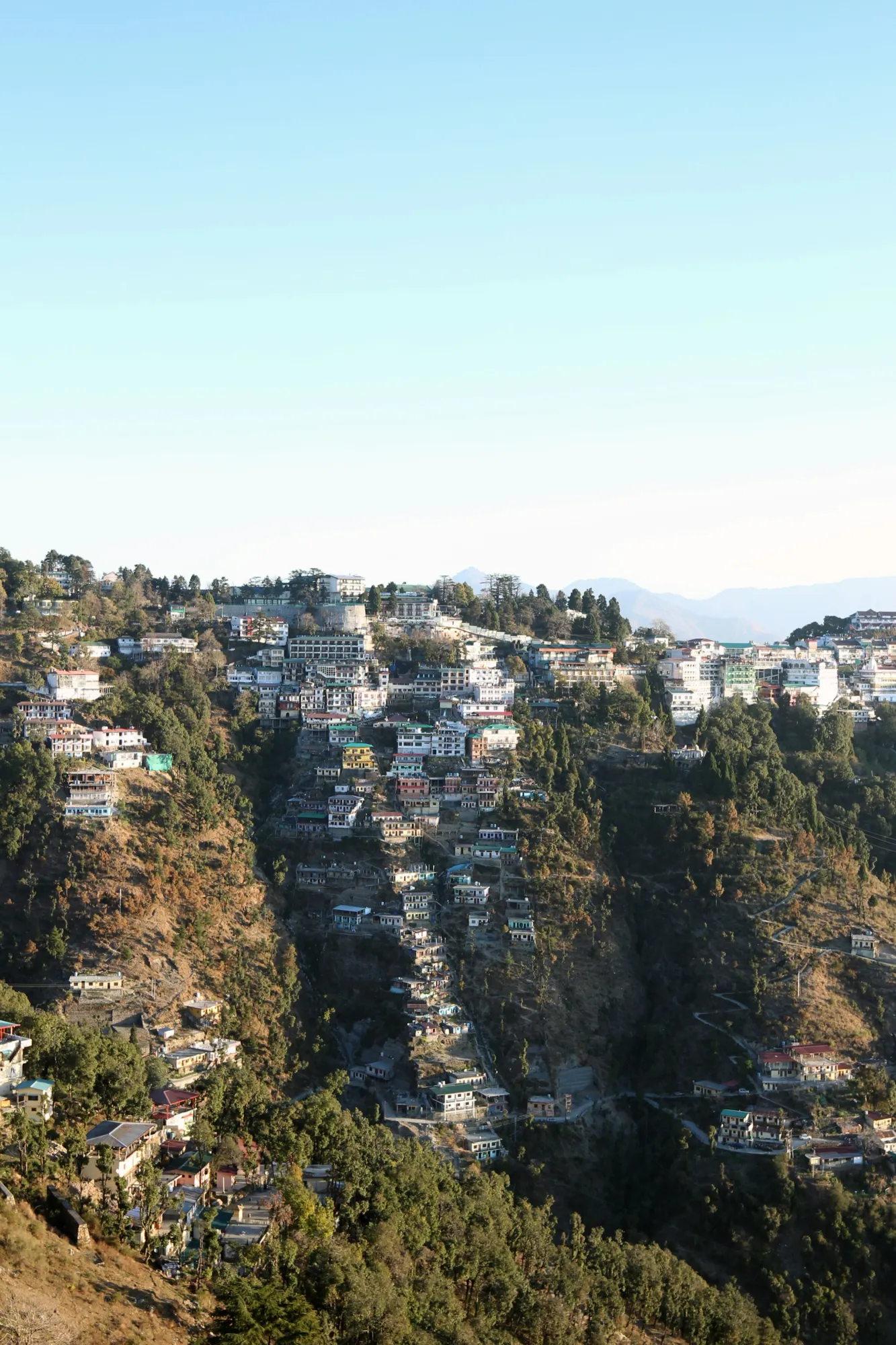
Mussoorie is a hill station at about 2,000 m on a ridge above Dehradun, in Uttarakhand's Dehradun district. Developed by the British in the 1820s, it is known for its long Mall Road, colonial churches and schools, and views of the Doon Valley on one side and snow peaks of the Garhwal Himalaya on the other.
It is one of the easiest hill stations to reach from Delhi, so it gets busy on weekends and holidays. Quieter Landour, just above town, keeps the old hill-station feel with cottages, bakeries and forest walks.
Why go to Mussoorie
Views on both sides
The Doon Valley below and, on clear days, snow peaks such as Bandarpunch to the north.
Mall Road and Landour
A long walking promenade lined with shops, and a quiet old cantonment of cottages and pine forest above it.
Cool summers, winter snow
Pleasant when the plains are hot, and occasional snowfall between December and February.
Things to do in Mussoorie
Walk Mall Road and Camel's Back Road
Stroll from Library Chowk to Picture Palace, then take the quieter Camel's Back Road loop.
All yearGun Hill and Lal Tibba
Two viewpoints over the town and the Himalaya; Lal Tibba in Landour is the highest point.
Oct - Mar for clear viewsKempty Falls
The best-known waterfall near Mussoorie, about 15 km away on the Yamunotri road.
Mar - JunGeorge Everest's House
The restored 1832 home of the Surveyor General after whom Mount Everest is named.
All yearDistances from Mussoorie
Before you go
- Weekends and long holidays bring heavy traffic and parking queues on the Dehradun-Mussoorie road. Arrive early or travel midweek.
- Mall Road is mostly a walking street; park at the paid lots near Library Chowk or Picture Palace.
- Nights are cold even in summer. Carry a warm layer all year.
- Snow is not guaranteed in winter; check forecasts before planning a snow trip.
- In the monsoon (July to September), landslides can block roads around Mussoorie.
More about Mussoorie
History
The British developed Mussoorie as a summer retreat in the 1820s, and the army set up the Landour cantonment just above it. Churches, boarding schools and cottages from that era still line the ridge. Christ Church on Mall Road was built in 1836. Sir George Everest, Surveyor General of India, lived at Park Estate from 1832, and Mount Everest is named after him.
Landscape
The town follows a long ridge at around 2,000 m, rising to about 2,275 m at Lal Tibba in Landour. Deodar, oak and rhododendron forests cover the slopes, and on clear days, mainly from October to March, the snow peaks of the Garhwal Himalaya line the northern horizon.
Culture
Mussoorie has a long literary and school tradition, and a Tibetan community in Happy Valley with its own monastery. In winter, the town is known for the Winterline, a band of colour on the horizon at sunset, and the Winterline Carnival, usually held in late December.
Mussoorie FAQs
Is Mussoorie worth visiting?
Yes, especially for a short, easy hill-station break from Delhi or Dehradun. Visit midweek or stay in Landour if you want to avoid crowds.
How many days are enough for Mussoorie?
Two days cover Mall Road, Landour, Gun Hill, Kempty Falls and George Everest's House. Add a day for Dhanaulti or Surkanda Devi.
Does it snow in Mussoorie?
Sometimes. Snowfall is most likely between late December and February, but it doesn't happen every year. Dhanaulti and Lal Tibba, which are higher, get snow more often.
Is Mussoorie crowded?
On weekends, long holidays and in May and June it is very busy. Weekdays, and October to early December, are much quieter.