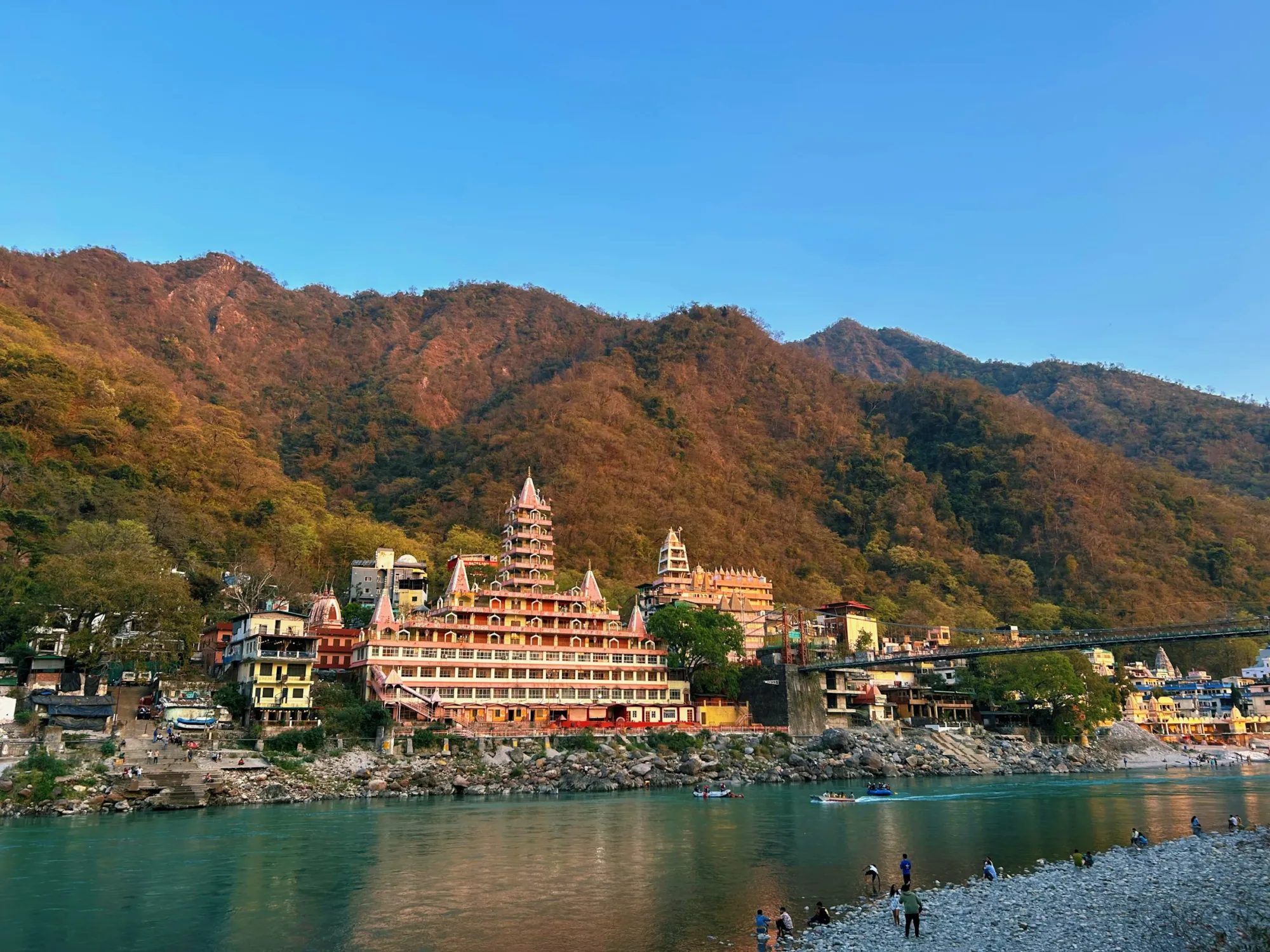
Rishikesh sits on the Ganga in Uttarakhand's Dehradun district, at about 340 m, where the river leaves the Shivalik hills and enters the plains. For centuries it has been a stop for sadhus and pilgrims heading into the Himalaya, and today it is best known as the Yoga Capital of the World, with dozens of ashrams and yoga schools along both banks.
Most visitors come for the evening Ganga aarti, a yoga course, or white-water rafting on the river above town. Rishikesh is also the starting point of the road to Badrinath, Kedarnath and the Char Dham.
Why go to Rishikesh
Ashrams and the Ganga aarti
Evening aarti with lamps, chants and bells at Triveni Ghat and Parmarth Niketan.
Rafting on the Ganga
Grade II to IV rapids on stretches from 9 to 36 km, from September to June.
Yoga and meditation
Drop-in classes, long courses and the International Yoga Festival every March.
Things to do in Rishikesh
Evening Ganga aarti
Watch the aarti at Triveni Ghat in town or Parmarth Niketan in Swargashram.
All year, at sunsetRiver rafting
Shivpuri to Rishikesh (about 16 km) is the most popular run for first-timers.
Sep - JunWalk the bridges
Cross Ram Jhula, Janaki Setu and the new Bajrang Setu glass bridge at Laxman Jhula.
All yearBeatles Ashram
The abandoned ashram where the Beatles stayed in 1968, now covered in murals.
All yearDistances from Rishikesh
Before you go
- Rishikesh is a vegetarian, alcohol-free town. Meat, eggs and alcohol are not sold.
- The Ganga is cold and fast even when it looks calm. Bathe only at ghats with chains and steps, and never swim after dark.
- Dress modestly at ghats, temples and ashrams.
- The Laxman Jhula and Swargashram side has narrow lanes; walking is often quicker than a car.
- Weekends, long holidays and the Kanwar Yatra in July bring very heavy traffic between Haridwar and Rishikesh.
More about Rishikesh
History
Hindu tradition links Rishikesh with sages who meditated here, and with Lakshmana, brother of Lord Rama, who is said to have crossed the Ganga on a rope at the spot now called Laxman Jhula. In the 20th century the town grew as a centre of yoga and Vedanta: Swami Sivananda founded the Divine Life Society here in 1936, and the Beatles' stay at Maharishi Mahesh Yogi's ashram in 1968 made Rishikesh famous worldwide.
Landscape
The town spreads along both banks of the Ganga. The west bank holds the main town, Triveni Ghat and the bus stand; the east bank holds Swargashram and its ashrams. Upstream, the Tapovan and Laxman Jhula area climbs into the hills, and the forests of Rajaji National Park begin just across the river.
Culture
Life in Rishikesh follows the river: morning dips, temple bells, evening aarti and a steady flow of pilgrims and yoga students. The International Yoga Festival is held every year, usually in March, with classes and talks at ashrams across town.
Rishikesh FAQs
Is Rishikesh worth visiting?
Yes, if you enjoy rivers, yoga, temples or adventure sports. The evening aarti, the bridges and the riverside cafes make even a short visit worthwhile.
How many days are enough for Rishikesh?
Two to three days cover the aarti, a rafting trip, the Beatles Ashram and a temple day trip such as Neelkanth Mahadev or Kunjapuri. Yoga courses need a week or more.
Is Laxman Jhula open?
The old Laxman Jhula suspension bridge has been closed for safety since 2019. A new 132 m bridge, Bajrang Setu, with glass walkways on both sides, opened beside it in 2026.
Can you drink alcohol or eat meat in Rishikesh?
No. Rishikesh is a vegetarian, alcohol-free town, and meat, fish, eggs and alcohol are not sold within its limits.