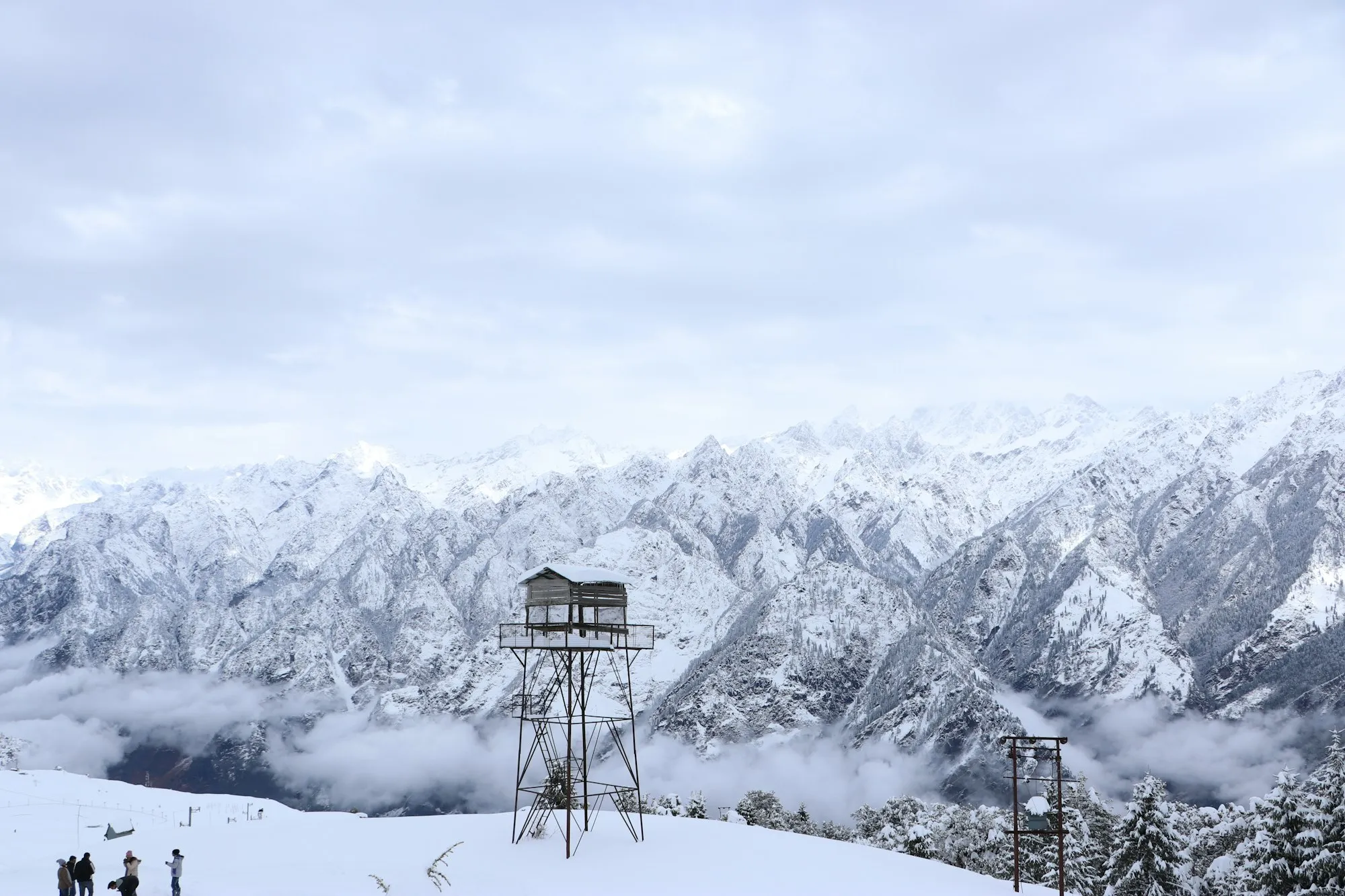
Auli is a high-altitude meadow and ski area in Uttarakhand's Chamoli district, on the slopes above Jyotirmath (Joshimath). Snow covers it from about late December to March, when it becomes India's best-known place to learn skiing. Once the snow melts, the same slopes turn into grassland, and a short trail leads through oak forest to Gorson Bugyal.
Most visitors come for one of two things: winter snow, or clear views of Nanda Devi and the Garhwal peaks. Jyotirmath, the town below, is also the gateway to Badrinath and the Valley of Flowers.
Why go to Auli
Snow and skiing
About 20 km of slopes with a chair lift and ski lift. Snow is most reliable in January and February.
A wall of peaks
Nanda Devi, Trishul, Dronagiri, Kamet and Mana Parvat line the view across the valley.
Meadows after the melt
From April the slopes turn green and an easy trail leads to Gorson Bugyal.
Things to do in Auli
Skiing
Cross-country, slalom and downhill on about 20 km of slopes.
Jan - MarGorson Bugyal walk
A gentle trail through oak and rhododendron forest to a wide meadow at about 3,050 m, with Nanda Devi and Trishul in front of you.
Apr - Jun, Sep - NovKuari Pass trek
One of Garhwal's best short treks, also called the Curzon Trail.
Apr - Jun, Sep - DecSnow play
Sledging, snow walks and snowball fights on the lower slopes.
Jan - FebDistances from Auli
Before you go
- The road from Jyotirmath to Auli can close for a day after heavy snow. Keep a buffer day in winter.
- Mobile signal is weak on parts of the highway. Download offline maps before you leave Rishikesh.
- ATMs are in Jyotirmath, not on the slopes. Carry cash.
More about Auli
History
Auli's slopes were long used as summer pasture by shepherds from the villages around Jyotirmath. The ski area was developed by the state tourism board, and national ski championships have been held here. The town below, Jyotirmath, has been a pilgrimage centre for over a thousand years as the seat of one of Adi Shankaracharya's four mathas.
Landscape
The slopes run from about 2,900 to 3,050 m between oak, deodar and fir forest on the ridge above the Alaknanda valley. From the top, the Garhwal Himalaya spreads across the horizon, with Nanda Devi (7,816 m) the highest peak in view.
Food
Most stays on the slopes serve home-style meals, and choice is limited. In Jyotirmath you'll find dhabas serving Garhwali staples such as kafuli (leafy green curry), aloo ke gutke (spiced potatoes) and jhangora kheer (barnyard millet pudding). Read our food guide ›
Culture
The Narsingh Temple in Jyotirmath becomes the winter seat of Lord Badri when Badrinath closes, so the town stays busy with pilgrims through the cold months. Nearby is the Jyotirmath of Adi Shankaracharya and the old mulberry tree known as the Kalpavriksha.
Auli FAQs
Is Auli worth visiting in summer?
Yes. April to June brings green meadows, clear walks to Gorson Bugyal and fewer crowds. You won't get snow, but the views of Nanda Devi are excellent.
How many days are enough for Auli?
Two to three nights in Auli or Jyotirmath covers the slopes, Gorson Bugyal and a Badrinath day trip in season. Add a full travel day each way from Rishikesh.
Is Auli safe after the Joshimath subsidence?
Hotels on the Auli slopes operate and the road from Jyotirmath is in use. Check Chamoli district advisories before travelling, especially in monsoon.
Do I need a permit for Auli?
No permit is needed to visit Auli. Treks beyond Gorson Bugyal, such as Kuari Pass, may need forest department permission, which local operators arrange.