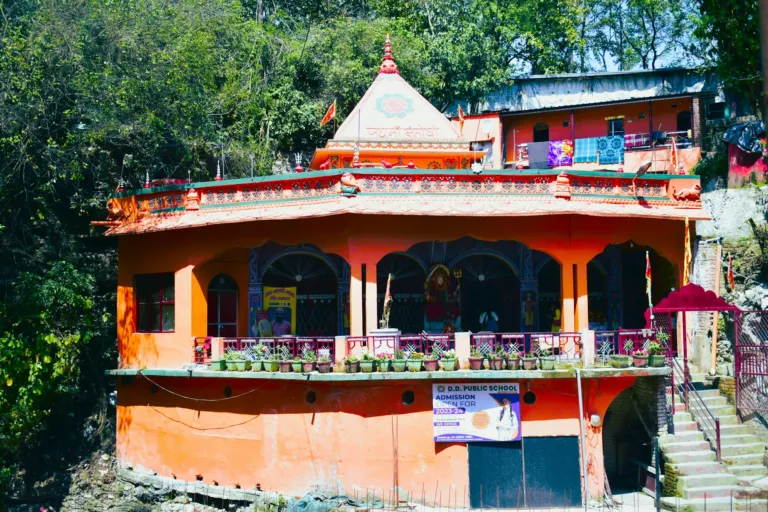
Ganga Aarti at Har Ki Pauri: The Story Behind Haridwar's Evening Prayer
Also called Haridwar Ganga Aarti · हर की पौड़ी गंगा आरती
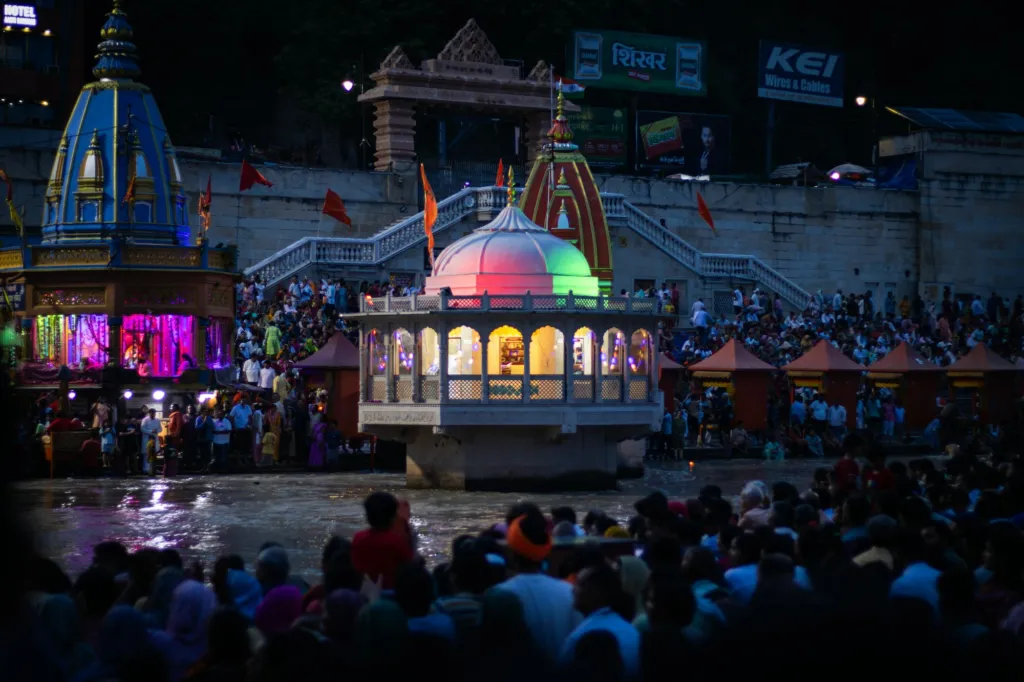
The Ganga Aarti at Har Ki Pauri is the evening prayer to the river Ganga held every day at sunset at Brahmakund in Haridwar. Priests wave large brass fire lamps, bells ring and devotees float diyas on the water. It is said to have been started in its present form in 1916 by Pandit Madan Mohan Malaviya and is run by the Shri Ganga Sabha.
| Deity | Goddess Ganga |
|---|---|
| District | Haridwar |
| Timings | Sunset daily (≈ 5:30 pm winter, 6:30-7 pm summer); smaller aarti at sunrise |
| Opening dates | Every day of the year |
| Registration | None; free for all |
| Nearest road head | Pantdweep parking, then walk |
The bells start first. Then the conches. And then, all at once, a row of priests lifts tiered brass lamps blazing with fire and begins to swing them in slow circles over the Ganga. On the steps behind them, thousands of people go quiet. It's about six in the evening at Har Ki Pauri, and this happens every single day.
If you only see one thing in Haridwar, make it this. Here's how it began, what it means, and how to watch it without spending the whole time fighting the crowd.
What is the Ganga Aarti at Har Ki Pauri?
It is a daily prayer to the river Ganga, held at sunset at Brahmakund, the holiest spot on Haridwar's main ghat. Aarti means offering light to a deity, and here the deity is the river herself, worshipped as the goddess Ganga.
There are actually two aartis a day: a quieter one around sunrise and the famous one at sunset. The evening aarti is the one people travel for, with priests on the steps, lamps reflected on the fast water and crowds on both banks.
How did the Ganga Aarti begin?
People have prayed to the Ganga at this ghat for centuries, but the daily evening aarti in its present form is credited to Pandit Madan Mohan Malaviya, who is said to have started it in 1916. Malaviya, the freedom fighter and founder of Banaras Hindu University, was also among the people behind the Shri Ganga Sabha, the body that still runs the aarti and looks after the ghat today.
So the ceremony you watch is a little over a hundred years old, but the place it happens is far older. That mix of old and new is part of what makes Har Ki Pauri feel the way it does.
Why is Brahmakund so sacred?
Hindu belief says Brahmakund is one of the four places where drops of amrit, the nectar of immortality, fell to earth. The story goes back to the churning of the ocean, when gods and demons fought over a pot of amrit and a few drops spilled at Haridwar, Prayagraj, Ujjain and Nashik. Those four places are where the Kumbh Mela is held.
The name Har Ki Pauri is usually explained as 'the steps of Hari', meaning Lord Vishnu, and a stone on the ghat is believed to carry his footprint. Tradition also says King Vikramaditya first built the ghat in memory of his brother Bharthari, who meditated by the river here.
What happens during the aarti?
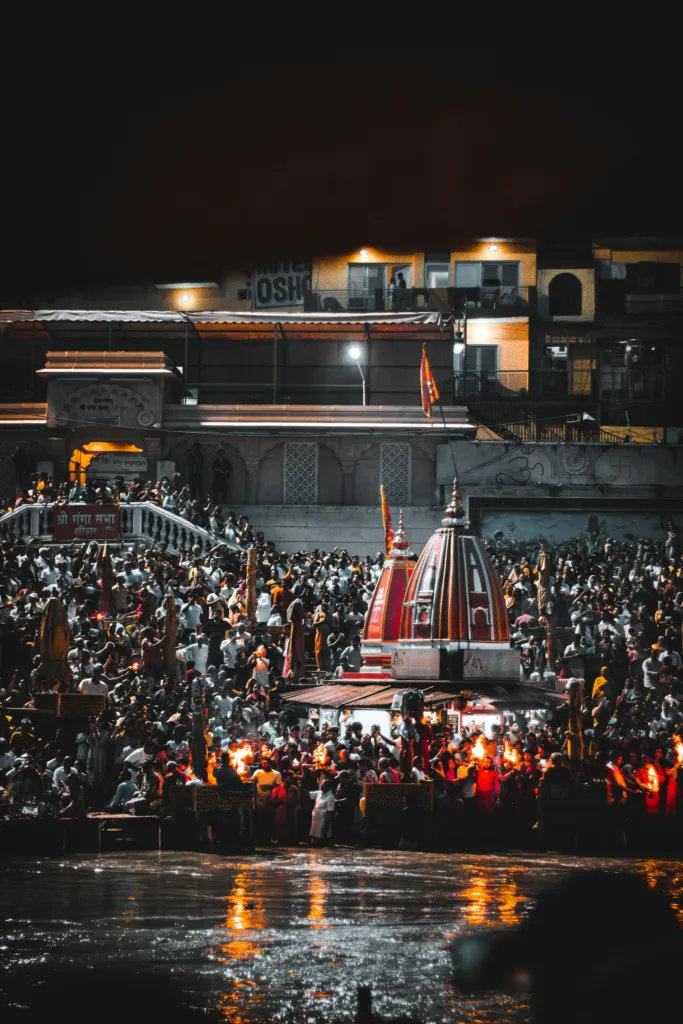
Priests in saffron stand in a line facing the river, chant, ring bells and wave large multi-tiered brass lamps in circles, while devotees float small leaf boats of flowers and lit diyas on the water. The main part lasts around 20 to 30 minutes.
- An hour before: the steps fill up, flower sellers move through the crowd and volunteers clear a space for the priests.
- Just after sunset: bells and conches start, and the chanting begins.
- The lamps: the priests raise the burning lamps and move them in slow circles towards the river.
- The diyas: people let their leaf boats go, and hundreds of small flames drift away downstream.
- After: the crowd thins slowly; many stay to take a dip or simply sit by the water.
What does the aarti mean?
For devotees, it is a way of thanking the Ganga for life, water and purification, and of asking for blessings for family, the living and the dead. Floating a diya is a small personal prayer: some people make a wish, others remember someone they have lost.
You don't need to be religious to feel it. Honestly, even the most restless visitor tends to stop talking once the bells begin.
How to watch the Ganga Aarti well
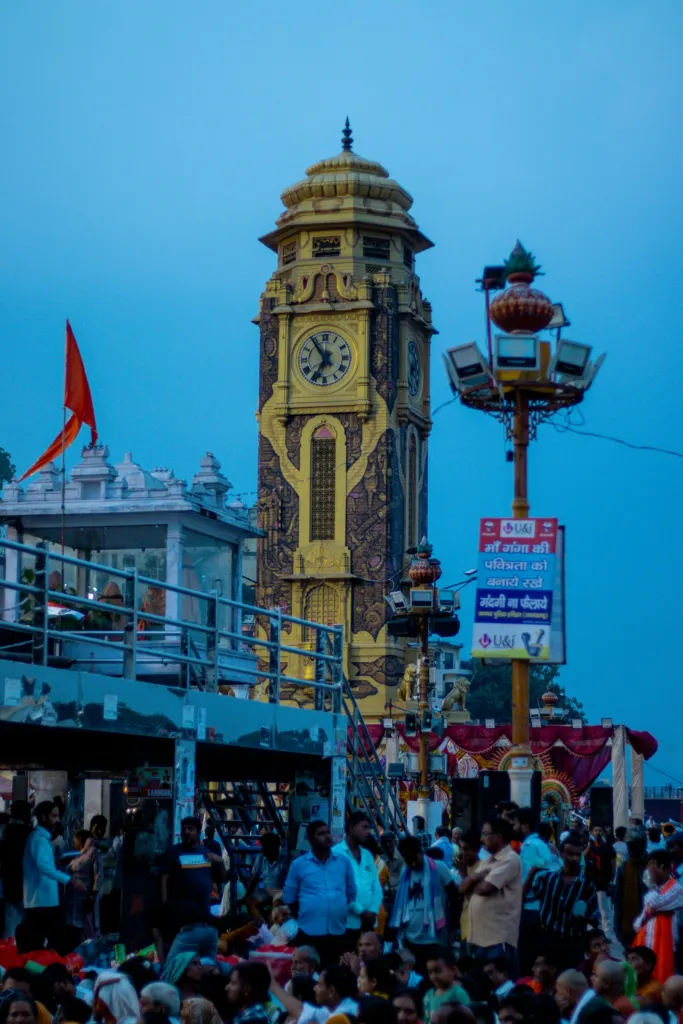
Reach 45 to 60 minutes before sunset, sit on the steps facing Brahmakund or cross to the clock-tower side, and keep your valuables zipped. A few more tips:
- It's free. Nobody can sell you a 'VIP' spot. Give donations only at Ganga Sabha counters and take a receipt.
- Weekends and festivals are packed. A weekday in winter is the calmest time.
- Getting there: vehicles can't reach the ghat. Park at Pantdweep and walk across.
- Want it quieter? Go for the sunrise aarti instead.
- Coming from Rishikesh? It's about 22-25 km. See our Rishikesh guide for planning both towns together.
When is the aarti at its biggest?
On festival days like Ganga Dussehra, Kartik Purnima, Diwali and Makar Sankranti, and above all during the Kumbh and Ardh Kumbh melas. The next Ardh Kumbh in Haridwar is planned from January to April 2027, with the main Amrit Snans in March and April. Expect enormous crowds then, and book stays months ahead.
If you want the aarti without the madness, pick any ordinary weekday in November or February. The lamps burn just as bright.
Ganga Aarti at Har Ki Pauri: The Story Behind Haridwar's Evening Prayer: FAQs
What time is the Ganga Aarti at Har Ki Pauri?
It starts shortly after sunset: roughly 5:30 pm in winter and 6:30-7 pm in summer. A smaller aarti is held at sunrise.
Who started the Ganga Aarti in Haridwar?
Its present form is credited to Pandit Madan Mohan Malaviya, who is said to have started it in 1916. It has been run by the Shri Ganga Sabha since.
Is there a fee to attend the aarti?
No. The aarti is free. Give donations only at official Ganga Sabha counters and take a receipt.
Where is the best place to watch it?
On the steps facing Brahmakund for a close view, or from the clock-tower side across the water to see the whole ghat.
How long does the aarti last?
The main aarti lasts around 20-30 minutes, but people gather an hour before and stay after to float diyas.