Kedarkantha month by month
JanDeep snow
FebDeep snow
MarSnow on top
AprMelting, milder
MayGreen, warm
JunPre-monsoon
JulMonsoon
AugMonsoon
SepRain easing
OctClear, dry
NovCold, dry
DecFirst snow
BestOkayAvoid
The seasons on Kedarkantha
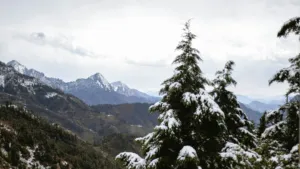
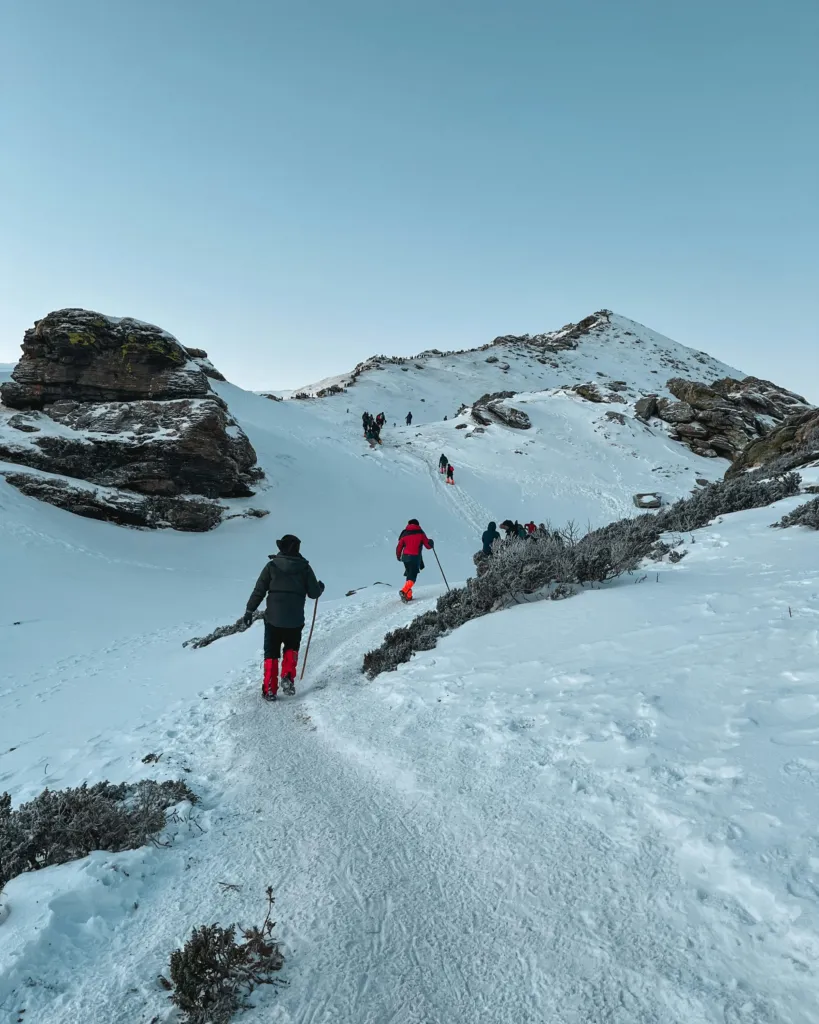
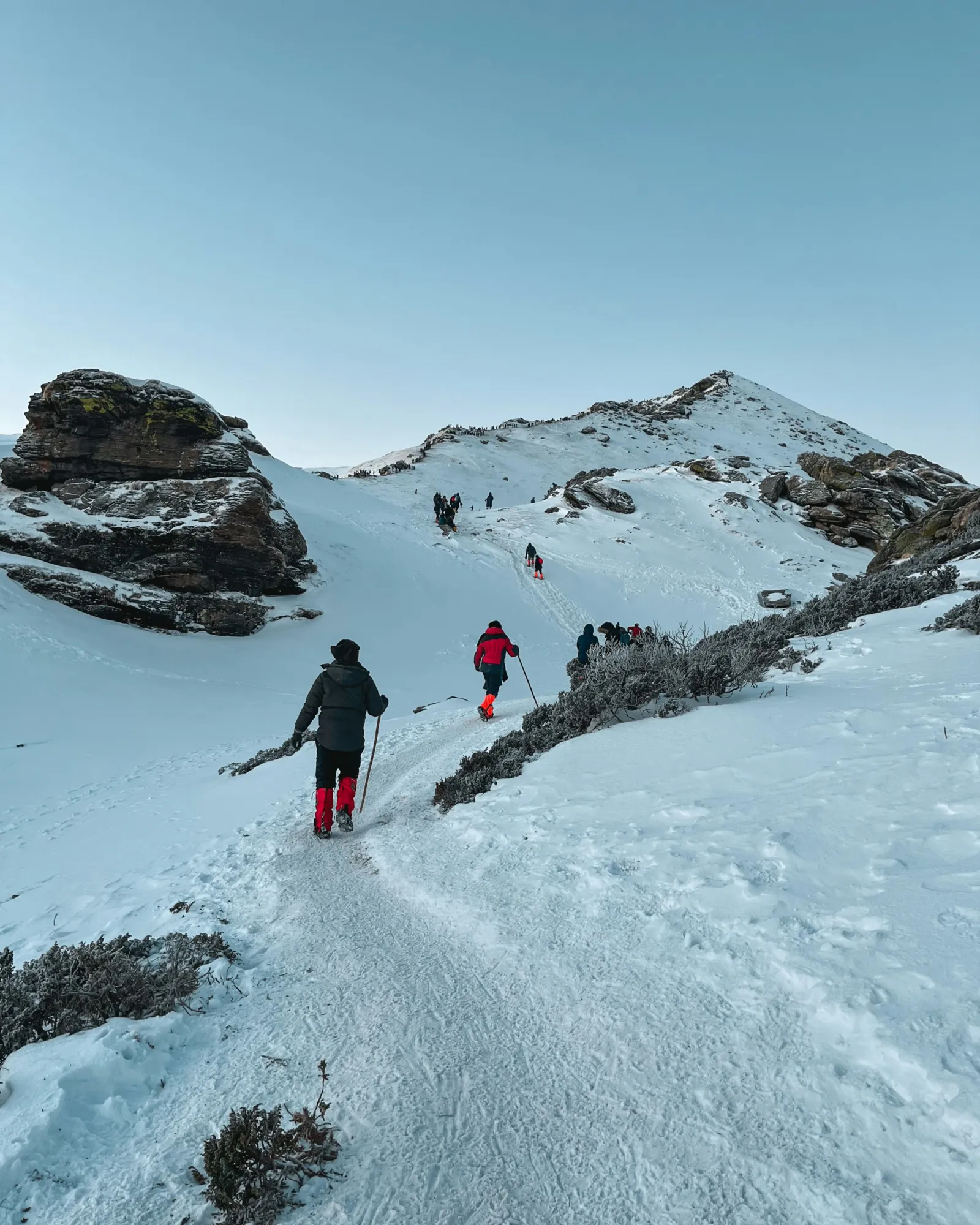
Winter snow
Peak seasonSnow covers the trail from Juda ka Talab upwards and the pond freezes. Most crowded around Christmas and New Year; book early.
Suits: First-time snow trekkers
Late winter and spring
GoodSnow stays on the upper slopes while the lower forest clears. Rhododendrons bloom in the forest in April.
Suits: Snow without the deep cold
Summer and autumn
QuietNo snow but green slopes in May-June and very clear skies in October-November. Far fewer trekkers.
Suits: Green meadows, clear views
Monsoon
AvoidHeavy rain, slippery trails, leeches and landslides on the road to Sankri.
Suits: Not recommended
What to pack for Kedarkantha
Winter (Dec - Mar)
- Down jacket and fleece
- Thermal inners, two sets
- Waterproof trek shoes with good grip
- Gaiters and microspikes
- Woollen cap, waterproof gloves, two pairs of woollen socks
- Sunglasses for snow glare
Spring and autumn
- Fleece and a light down jacket
- Rain jacket
- Trek shoes
- Cap, sunscreen and sunglasses
Always
- Head torch with spare batteries
- Two 1-litre water bottles
- Personal medicines and blister care
- Photo ID and medical certificate
- Small bag to carry rubbish down
Best Time for Kedarkantha: FAQs
When does snow start on Kedarkantha?
Usually in the first half of December, with the deepest snow in January. It varies every year, so check recent trip reports.
Is Kedarkantha good in October?
Yes, for clear views and dry trails, but there is usually no snow. Nights are already cold.
How cold is it on the Kedarkantha summit day?
In January the pre-dawn start can be around -10°C or colder with wind. Layer up and keep moving.