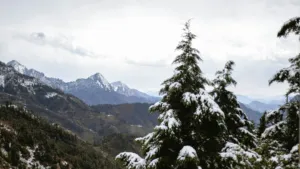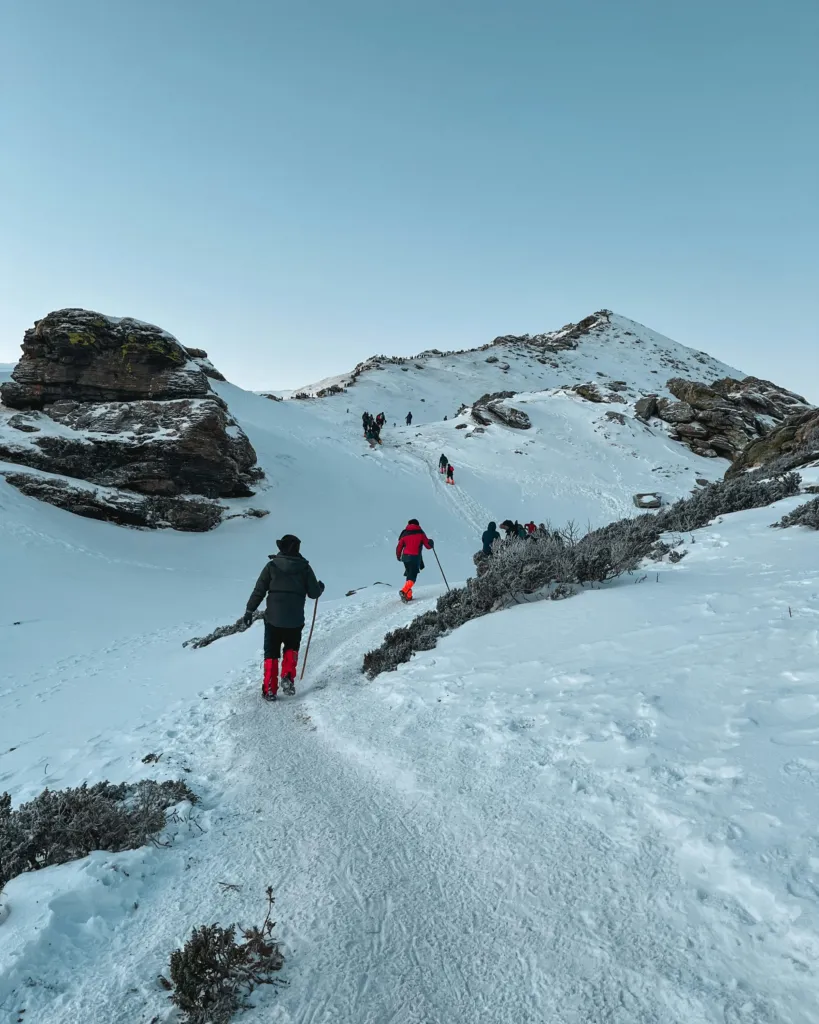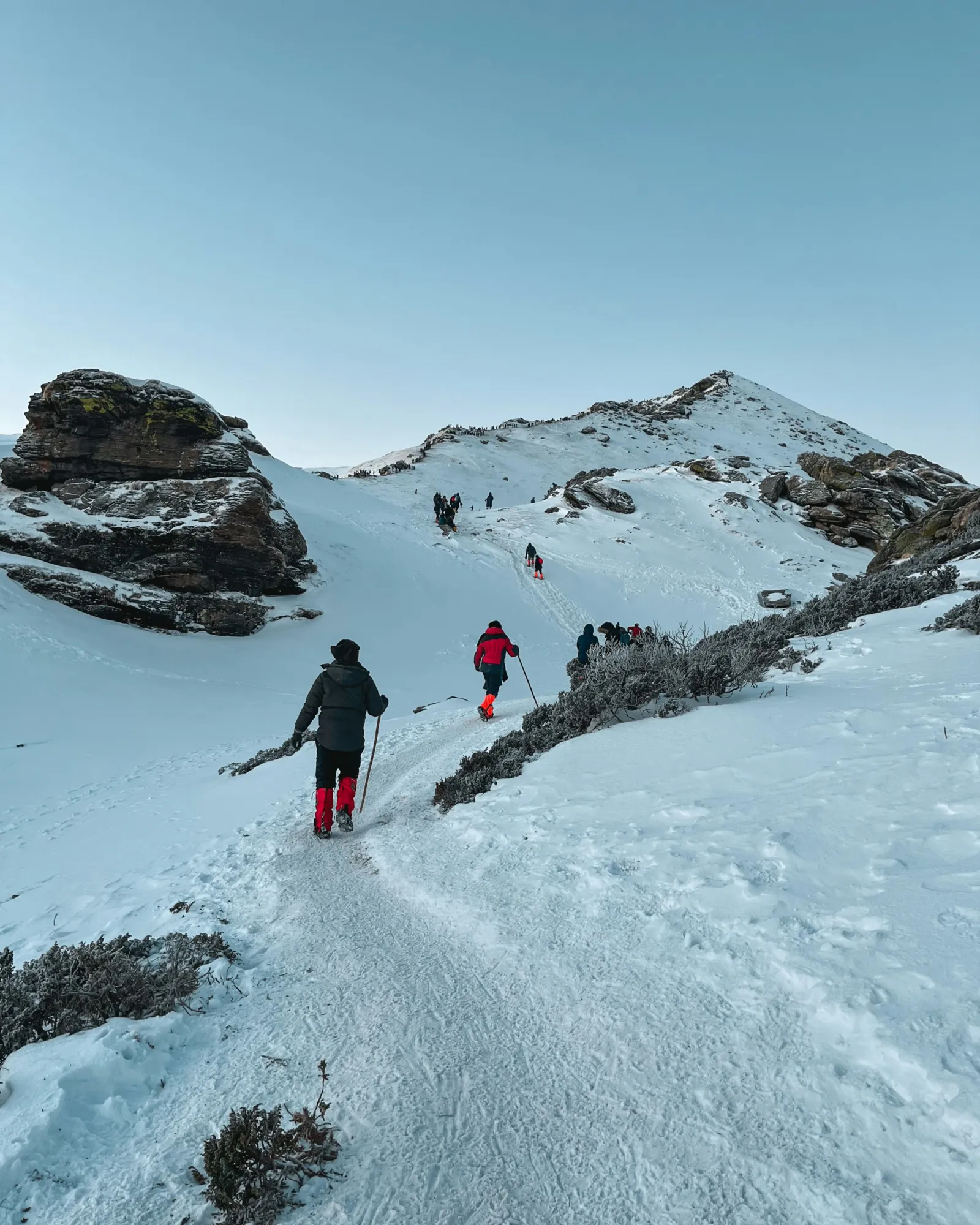
Kedarkantha is a summit of about 3,800 m (12,500 ft) in the Uttarkashi district of Garhwal, inside the Govind Wildlife Sanctuary. The trek starts and ends at Sankri, a small village about 190 km from Dehradun, and loops up through pine, oak and fir forest, past a frozen pond called Juda ka Talab, to a wide, snowy summit with views over the Swargarohini, Bandarpoonch and Black Peak ranges.
It is one of the most popular winter treks in India because it is short, well marked and safe for first-timers in good weather, yet it gives you real snow, a real summit climb and nights in tents on snow. Most groups take 4-5 days from Sankri, or 6 days from Dehradun.
The story of Kedarkantha
Local legends link the peak with Lord Shiva. The story most often told is that Shiva first chose this quiet ridge to meditate in the form of a bull. But the lowing of cattle from the villages across the Tons valley kept disturbing him, so he left and settled at Kedarnath instead. In another version, the Pandava Bhima began building a temple here, and the walls had only risen to Shiva's neck (kanth) when he left. That, people say, is how the peak got its name: Kedar-kantha.
Juda ka Talab, the pond on the way up, has its own story: it is said to have formed where a lock of Shiva's hair (jata) touched the ground. A small shrine stands on the summit, and many trekkers stop there before the descent.
Why do the Kedarkantha trek
Real snow for beginners
From December to February the whole upper trail is under snow, yet the route is short and gentle enough for first-timers.
A true summit
The final climb ends on a wide top with a 360° view of the Garhwal Himalaya at sunrise.
Forest and campsites
Pine, oak and fir forest, a frozen pond and camps on snowy clearings make every day different.
The trail, step by step
Sankri (≈ 1,950 m)
The roadhead village and starting point. Homestays, gear shops and the forest checkpost.
Juda ka Talab (≈ 2,780 m)
A small lake in a forest clearing, frozen white in winter. First campsite.
Kedarkantha Base Camp (≈ 3,400 m)
Open meadow camp with your first close view of the summit ridge.
Kedarkantha summit (≈ 3,800 m)
Early-morning climb on snow to the top, then a long descent back to Juda ka Talab or Hargaon.
Distances to Sankri
Before you go
- You need to be able to walk 5-6 hours a day with a light backpack. Start jogging or stair-climbing a month before.
- The summit climb starts around 3-4 am in the dark and cold; carry a head torch.
- Winter temperatures at the camps fall to about -5 to -10°C at night.
- Withdraw cash in Dehradun; ATMs near Sankri are unreliable.
- Power is available only at Sankri; carry a power bank.
- Carry all your rubbish back down, including wrappers and wet wipes.
Kedarkantha Trek FAQs
How difficult is the Kedarkantha trek?
It is rated easy to moderate. The first three days are gentle; the summit day is long and steep in parts, and snow makes it harder. Fit beginners usually manage it with a guide.
What is the best time for the Kedarkantha trek?
December to April. For deep snow go between late December and February; March and April are milder with snow on the upper slopes.
How high is Kedarkantha?
The summit is about 3,800 m (12,500 ft) above sea level.
Can I do the Kedarkantha trek alone?
It is not advised. Operators and the forest department expect trekkers to go with a registered agency or a certified local guide, especially in winter.
How many days does the Kedarkantha trek take?
Usually 4-5 days from Sankri, or about 6 days from Dehradun including the long drive each way.