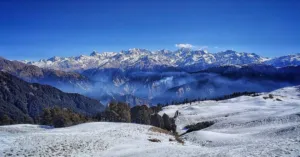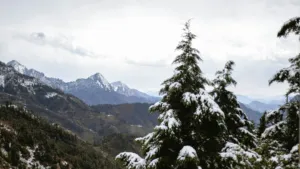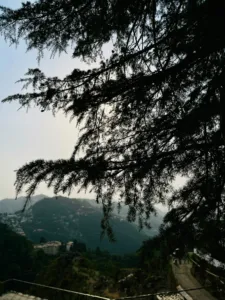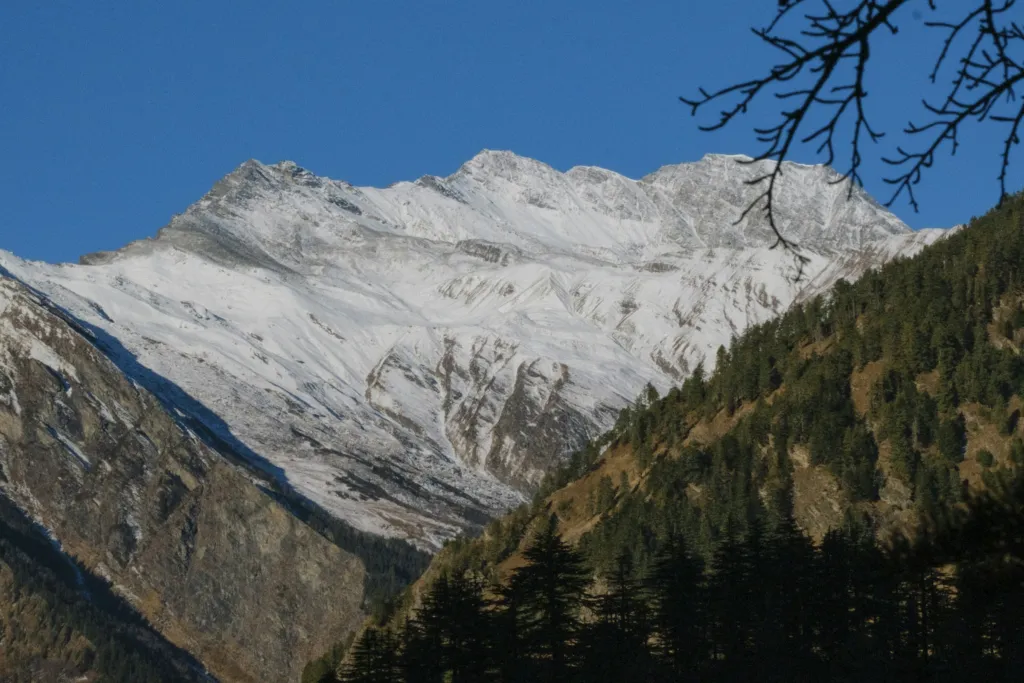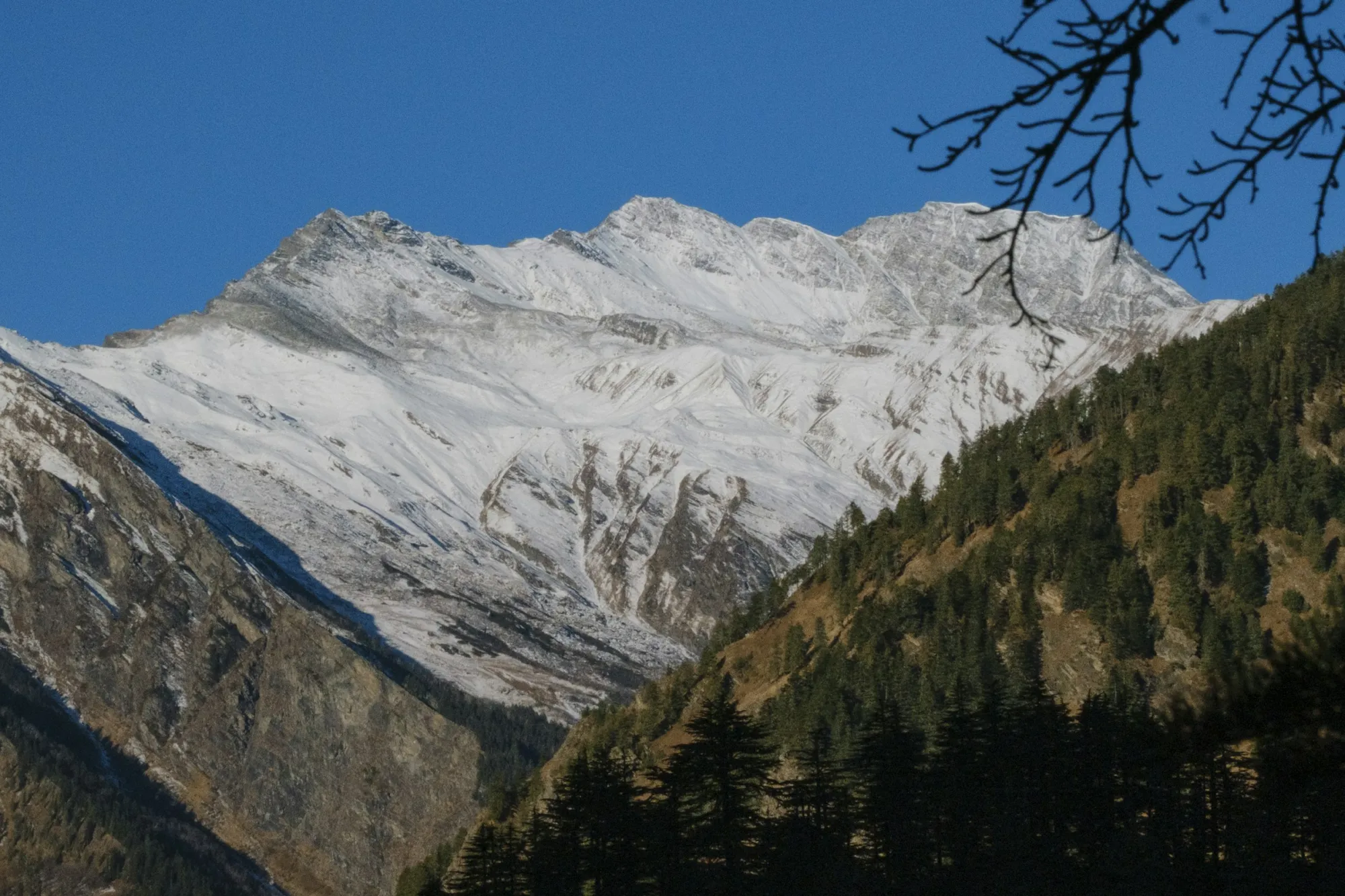
Harsil (also written Harshil) is a small village and army cantonment at about 2,745 m on the Bhagirathi river in Uttarkashi district. It lies on the road to Gangotri, about 78 km beyond Uttarkashi, in a wide, flat stretch of valley ringed by deodar forest and snow peaks. Apple orchards, wooden village houses and the sound of the river make it one of the calmest places in Garhwal.
Most people come to slow down for a night or two on the way to Gangotri, to walk to the villages of Bagori and Mukhba, and to see the orchards in bloom in spring or heavy with apples in autumn. In winter, the valley is often under snow.
The story of Harsil
Harsil's best-known story is that of Frederick 'Pahari' Wilson, an Englishman who left the East India Company's army in the 1840s and settled here. He made a fortune selling deodar timber from these forests for railway sleepers, and he is said to have brought the first apples and rajma to the valley, which are still Harsil's main crops. Locals called him the 'Raja of Harsil', and some say his life inspired Kipling's story The Man Who Would Be King.
Across the river is Mukhba, the village of the Gangotri priests. Every year after Diwali, when Gangotri closes for winter, the silver idol of Goddess Ganga is carried down to Mukhba, where she is worshipped until the temple reopens in spring.
Why go to Harsil
Deodar and orchards
A flat green valley of deodar forest and apple orchards beside the Bhagirathi.
Old villages
Wooden houses of Bagori and Mukhba, and the winter home of Goddess Ganga.
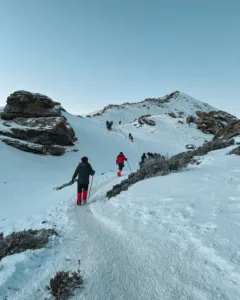
Snow in winter
One of the easiest places in Garhwal to see the whole valley under snow.
Main things to see
Bagori village
A village of wooden houses between the Jalandhari and Bhagirathi rivers, with sheep-rearing families and a small Buddhist influence.
Mukhba
Village of the Gangotri priests and winter seat of Goddess Ganga, across the river.
Apple orchards
White blossom in April and May, ripe apples from August to October.
Gangotri
The temple of Ganga, about 25-30 km up the valley; a half-day trip from Harsil in season.
Distances from Harsil
Before you go
- Harsil is in a sensitive border and army area. Indian citizens don't need a permit for Harsil itself; going further into the Nelong valley needs one.
- Carry ID and keep it handy at checkposts.
- ATMs are unreliable; withdraw cash in Uttarkashi.
- Mobile network is limited; BSNL and Jio work best.
- Nights are cold all year; carry warm clothes even in summer.
Harsil FAQs
Where is Harsil?
On the Bhagirathi river in Uttarkashi district, about 78 km beyond Uttarkashi on the road to Gangotri.
What is Harsil famous for?
Its deodar forests, apple orchards, wooden villages like Bagori, and Mukhba, the winter home of Goddess Ganga.
Does it snow in Harsil?
Yes, usually from December to February. The road can close for days after heavy snowfall.
Is Harsil safe to visit after the Dharali flood?
The road and yatra reopened in 2026. Check local advisories before you go, and avoid the monsoon months.