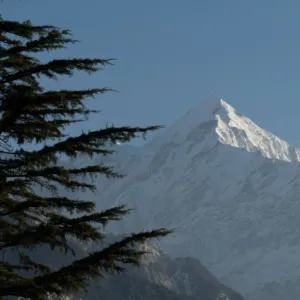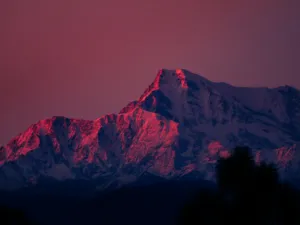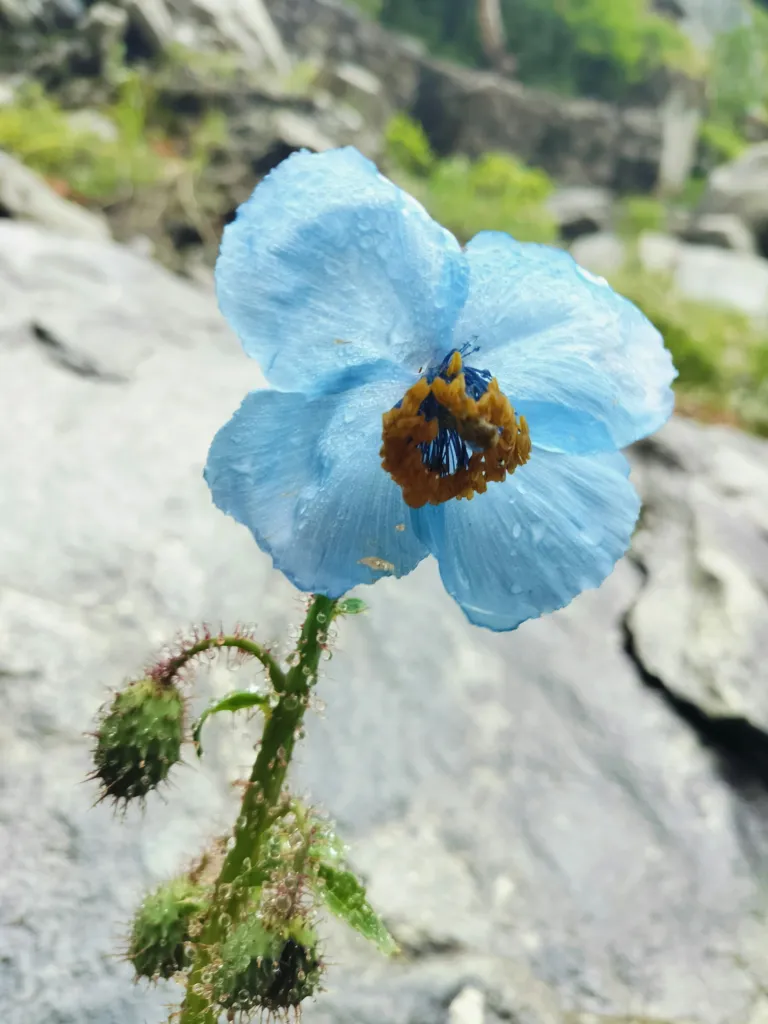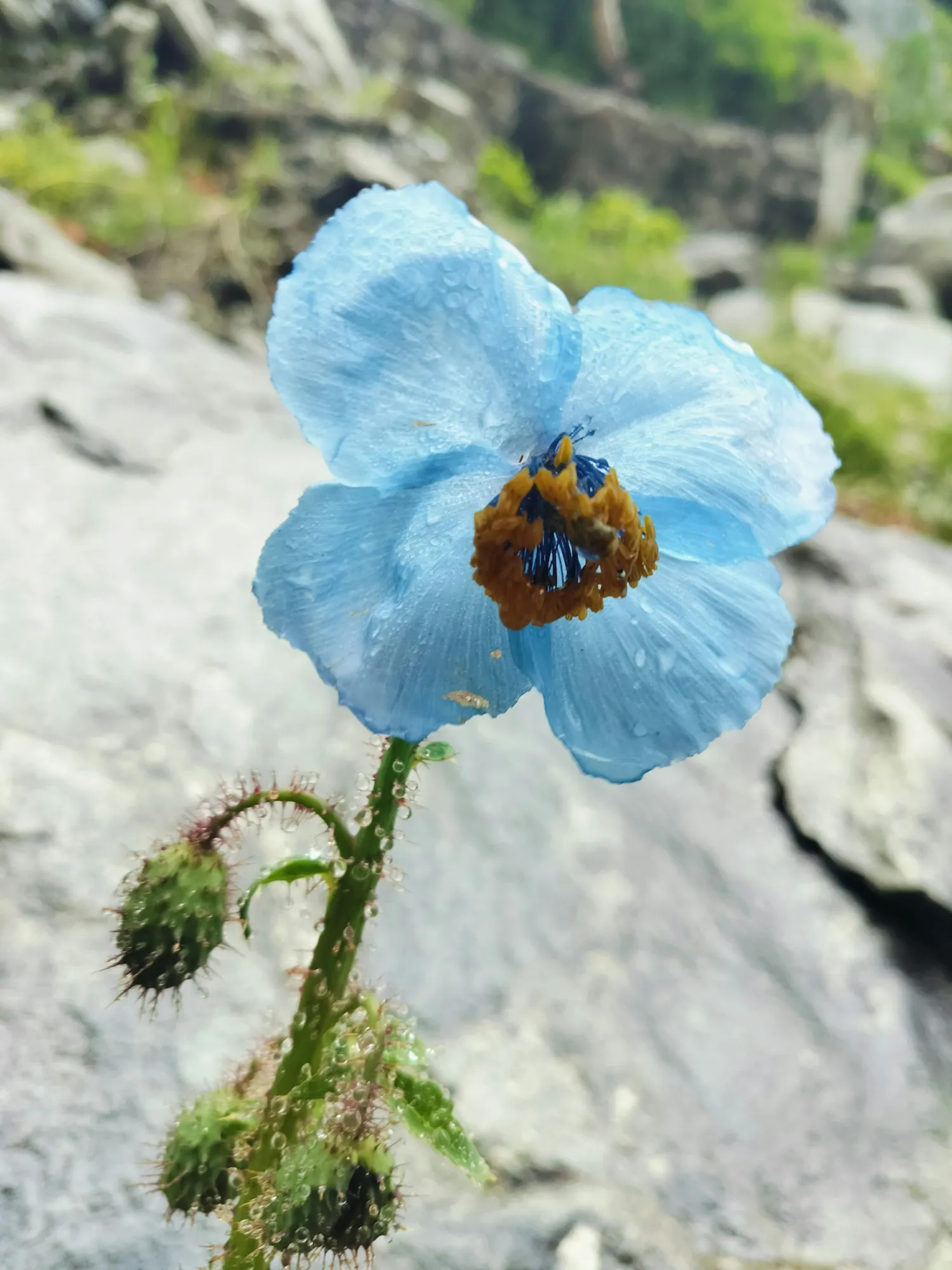
The Valley of Flowers is a high glacial valley at about 3,350 to 3,650 m in Chamoli district, above the road to Badrinath. For most of the year it lies under snow. But when the monsoon arrives, the green bowl fills with hundreds of kinds of wild flowers: blue poppies, cobra lilies, primulas, geraniums and balsams, changing colour week by week.
The walk is not hard. A wide stone path climbs from Pulna to the base village of Ghangaria, and from there it is about 4 km into the valley. That makes it one of the best first Himalayan treks, and many people combine it with the climb to Hemkund Sahib.
The story of the valley
Shepherds and villagers of the Bhyundar valley always knew this place, and many believed fairies lived here. The outside world heard of it in 1931, when British mountaineer Frank Smythe, returning from Kamet, wandered into a valley full of flowers. His book The Valley of Flowers made it famous.
In 1939, the botanist Joan Margaret Legge came to collect plants and died after slipping on the rocks. Her grave, with a small memorial stone, is still inside the valley. The area became a national park in 1982 and, together with Nanda Devi National Park, a UNESCO World Heritage Site in 2005.
Why do the Valley of Flowers trek
A meadow in full bloom
Hundreds of species of wild flowers carpet the valley in July and August.
An easy first trek
Well-made paths and a village base make it good for beginners.
Hemkund Sahib nearby
Add the high glacial lake and gurudwara at about 4,300 m.
The trek, stage by stage
Rishikesh to Govindghat
A long drive up the Alaknanda valley via Joshimath.
Pulna to Ghangaria
A steady climb on a stone path along the Lakshman Ganga.
Valley of Flowers
Walk in, explore the meadows and return to Ghangaria the same day.
Hemkund Sahib
A steep climb to the lake and gurudwara, then back down.
Distances from Govindghat
Flowers you may see
- Himalayan blue poppy (late July - August)
- Cobra lily
- Primulas (June - July)
- Himalayan balsam (August)
- Geranium and potentilla
- Brahma kamal (higher up, near Hemkund)
Valley of Flowers FAQs
When is the Valley of Flowers open?
From 1 June to 31 October every year. It is closed in winter because of snow.
What is the best time to see flowers?
Mid-July to mid-August, when the monsoon brings the most blooms. June has fewer flowers and some snow; September has fading flowers but clearer skies.
Can I stay overnight in the Valley of Flowers?
No. Camping is not allowed. Everyone stays in Ghangaria and walks into the valley for the day.
How difficult is the Valley of Flowers trek?
Easy to moderate. The path is well made, but you walk 10-14 km on some days with steady climbs. Hemkund Sahib is the hardest part.
Is there a helicopter to Ghangaria?
Yes, a helicopter runs from Govindghat to Ghangaria during the season, weather permitting. Book in advance.
How much is the entry fee?
₹150 for Indians and ₹600 for foreign nationals, valid for up to three days. Book online or at the forest counter in Ghangaria.