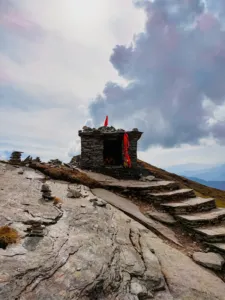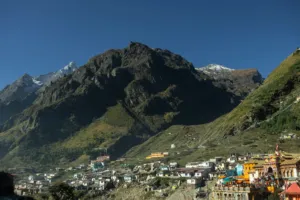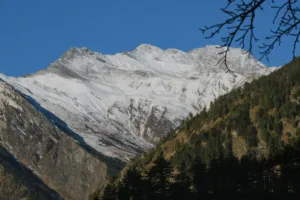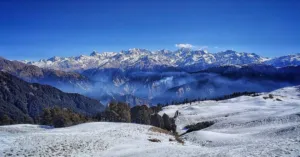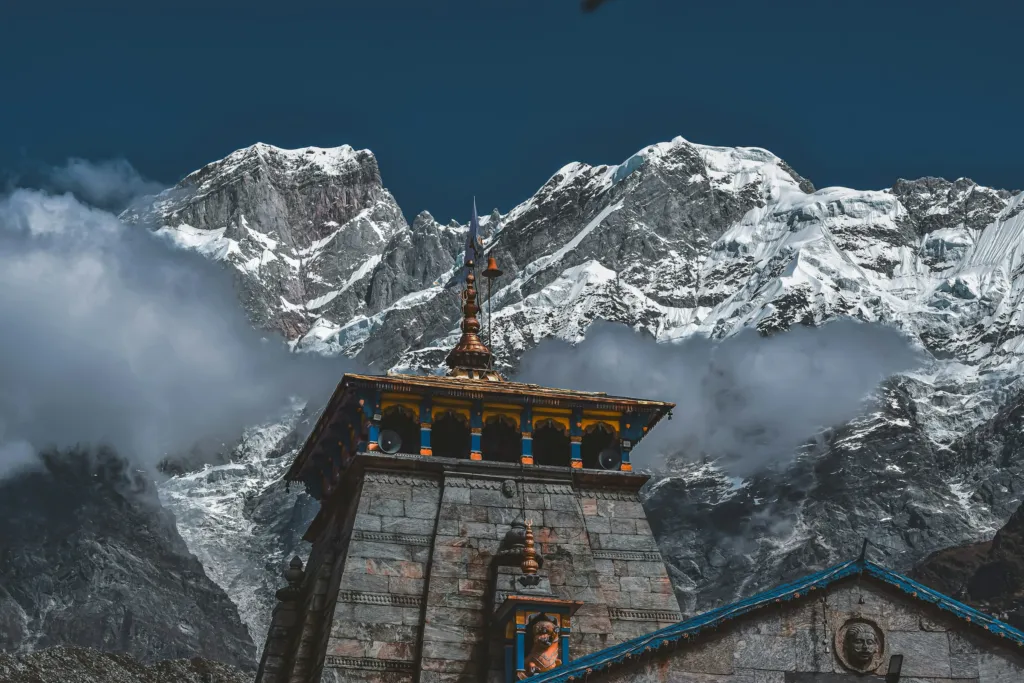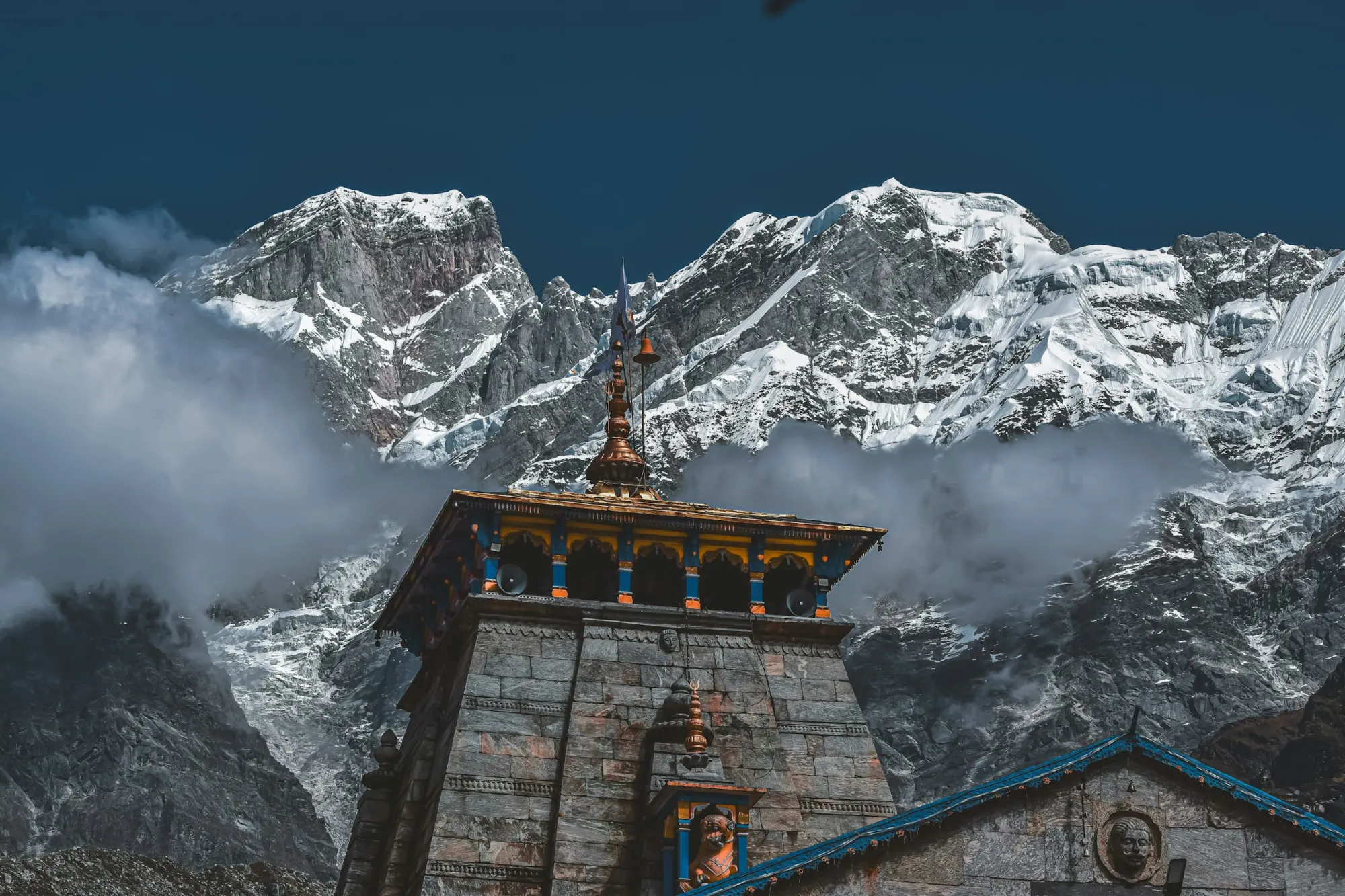
Kedarnath is one of the twelve Jyotirlingas of Lord Shiva and the highest of the four Char Dham. The grey stone temple stands at about 3,583 m at the head of the Mandakini valley in Rudraprayag district, with the snowy Kedarnath peaks rising right behind it.
There is no road to the temple. Pilgrims walk about 16 km from Gaurikund, ride a pony or palki, or fly in by helicopter. The temple opens in late April or May and closes on Bhai Dooj, after Diwali.
The legend of Kedarnath
After the Mahabharata war, the Pandavas wanted to be freed of the sin of killing their own kin, and went looking for Lord Shiva. Shiva did not want to forgive them so easily, so he hid in the Himalaya in the form of a bull. When Bhima recognised him and tried to catch him, the bull sank into the ground. Its hump stayed at Kedarnath, and that is the rock-like shivling worshipped here.
Other parts of the bull appeared at four more places, which together with Kedarnath form the Panch Kedar: Tungnath, Rudranath, Madhyamaheshwar and Kalpeshwar. Tradition says the Pandavas built the first temple, and Adi Shankaracharya later restored it; his samadhi lies just behind the shrine.
2013 and the Bhim Shila
In June 2013, a devastating flash flood swept through the Kedar valley. A huge boulder rolled down and stopped right behind the temple, splitting the water around it. The temple survived, and that rock is now worshipped as Bhim Shila.
Why go to Kedarnath
A Jyotirlinga in the snow
One of Shiva's twelve most sacred shrines, in a dramatic high valley.
A real Himalayan walk
A 16 km climb along the Mandakini, with waterfalls and glaciers.
Evening and dawn
Aarti at dusk and darshan at sunrise under the peaks.
Main things to see
Kedarnath temple
Darshan of the Jyotirlinga, plus the evening aarti.
Bhim Shila
The boulder that shielded the temple in the 2013 flood.
Adi Shankaracharya Samadhi
A memorial with a large statue of the saint behind the temple.
Bhairavnath temple
A short, steep walk above town; Bhairav guards Kedarnath in winter.
Distances to Kedarnath
Before you go
- Registration for the Char Dham Yatra is required; checks happen at Sonprayag.
- Private cars stop at Sonprayag; shared jeeps run the last 5 km to Gaurikund.
- The trek is steep in places; walk slowly and drink water to avoid altitude sickness.
- People with heart or lung problems should consult a doctor first.
- The temple closes on Bhai Dooj; worship moves to Omkareshwar temple, Ukhimath, for winter.
Kedarnath FAQs
How long is the Kedarnath trek?
About 16 km one way from Gaurikund. Most fit walkers take 6-8 hours up and 4-6 hours down.
Is there a helicopter to Kedarnath?
Yes. Helicopters fly from Phata, Sersi and Guptkashi in season. Book only on the official IRCTC heli-yatra portal.
When does Kedarnath open and close?
It opens in late April or May (date announced on Mahashivratri) and closes on Bhai Dooj, after Diwali.
Where is Kedarnath worshipped in winter?
At the Omkareshwar temple in Ukhimath, where the doli of Lord Kedarnath is brought after the temple closes.
Can I stay at Kedarnath?
Yes. GMVN huts, tents and private camps operate near the temple in season. Book ahead in May and June.